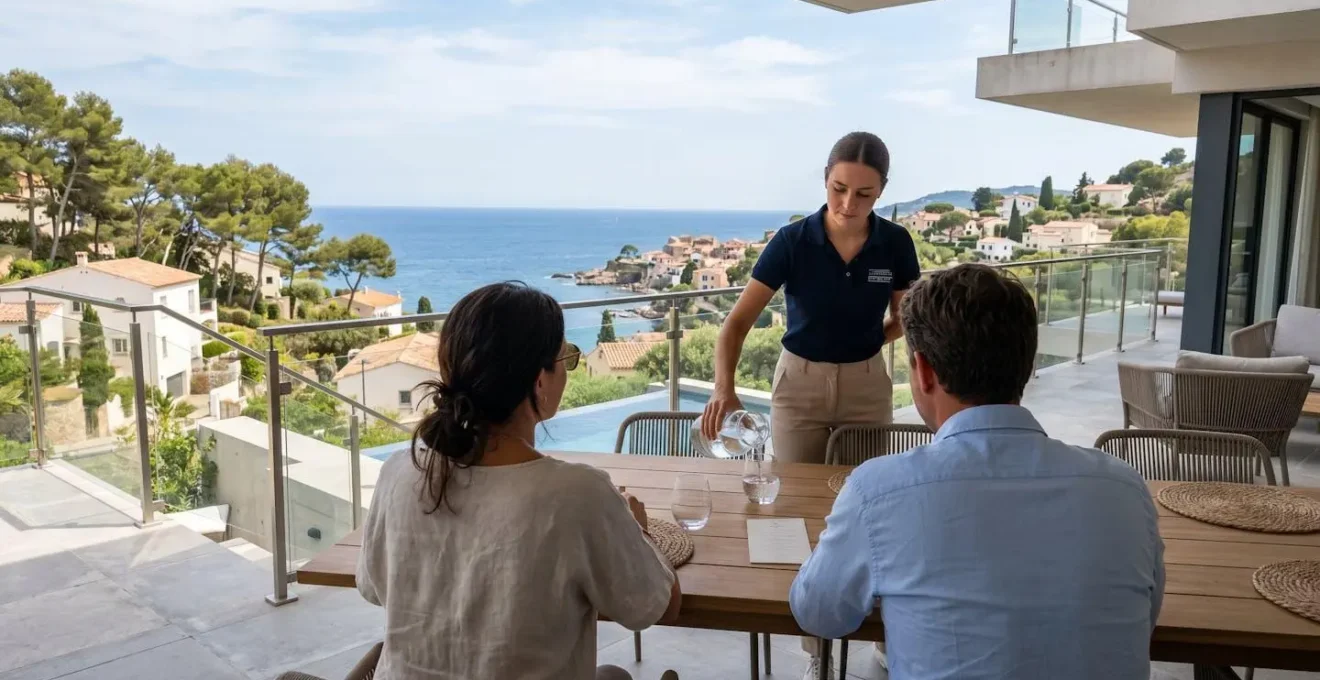
The luxury villa rental market has quietly transformed over the past three years. What began as a pandemic-driven flight to private accommodation has matured into something more sophisticated: properties that combine the exclusivity of a private residence with the seamless service of a five-star hotel. According to the 2025 Luxe Report published by The Leading Hotels of the World, bookings to UK and Ireland countryside destinations climbed nearly 40% over two years, reflecting sustained appetite for experiences that blend space, privacy and professional care. Yet many travellers still struggle to distinguish genuine hotel-grade service from superficial marketing promises. The difference lies in four core pillars that separate exceptional operators from standard rental agencies.
This shift represents more than temporary adaptation. The pandemic accelerated a permanent recalibration in how affluent travellers define luxury accommodation. Hotel suites, regardless of thread count or minibar selection, impose structural limitations: shared facilities, fixed meal schedules, neighbouring guests separated by a single wall. Villas eliminate these constraints whilst introducing a new challenge—maintaining service consistency without the institutional infrastructure of established hotel brands. The solution lies in operators who apply hospitality protocols traditionally reserved for five-star properties to private residential settings.
Not all services warrant equal attention when evaluating villa offerings. Marketing materials routinely promise “concierge support” and “housekeeping”—terms vague enough to encompass anything from a WhatsApp number that rarely responds to genuine round-the-clock guest care infrastructure. The four pillars examined below represent the minimum service threshold separating hotel-grade villa operations from glorified property rentals. Each addresses a specific friction point that degrades the holiday experience when handled poorly, and becomes invisible when executed professionally.
Your 4 transformative villa services in 60 seconds
- Local expert concierge — Arranges exclusive experiences, handles logistics and solves problems before you realise they exist
- Private chef service — Designs bespoke menus using morning-market ingredients, accommodates dietary requirements without restaurant constraints
- Daily housekeeping — Maintains hotel standards including turndown service, linen changes and discreet property care
- Round-the-clock guest care — Provides rapid response to requests, pre-arrival quality checks and continuous property oversight
A local expert at your service: the concierge advantage
Take the case of a family arriving on Île de Ré for a week-long stay. The property itself exceeds expectations—ocean views, private pool, contemporary interiors. Yet within hours, the questions multiply: Which beaches avoid afternoon winds? Where do locals source seafood? Can someone arrange sailing lessons for the children by tomorrow? Attempting to research, phone and negotiate in an unfamiliar region consumes half a day. A professional concierge eliminates this friction entirely, transforming vague holiday aspirations into confirmed bookings within minutes.
The term “concierge” appears frequently in rental listings, but hotel-grade execution requires specific infrastructure. Operators like travelparadise.fr distinguish themselves by maintaining dedicated staff with first-hand knowledge of each property and established relationships across the destination. This isn’t a remote call centre reading TripAdvisor reviews—it’s someone who can secure a chef’s table reservation at the island’s most sought-after restaurant or arrange a private vineyard tour that doesn’t appear on any booking platform.
What ‘hotel-grade’ actually means in villa context
According to the EHL hospitality school guide on hotel operating standards, luxury properties operate with formalised Standard Operating Procedures covering every guest touchpoint. For villa concierge services, this translates to four verifiable criteria: documented service protocols for common requests, staff training in anticipatory care, established response-time commitments and quality control mechanisms ensuring consistency across properties.
The most commonly overlooked benefit isn’t the obvious convenience—it’s the access to experiences unavailable through standard channels. As Hospitality Net outlines in its 2024 service excellence analysis, professional concierges excel at anticipatory service: “quickly sourcing missing items, arranging rides, or having guest information ready” before requests are even articulated. Local expertise transforms generic tourism into personalised discovery.
From market to table: curated dining in your villa
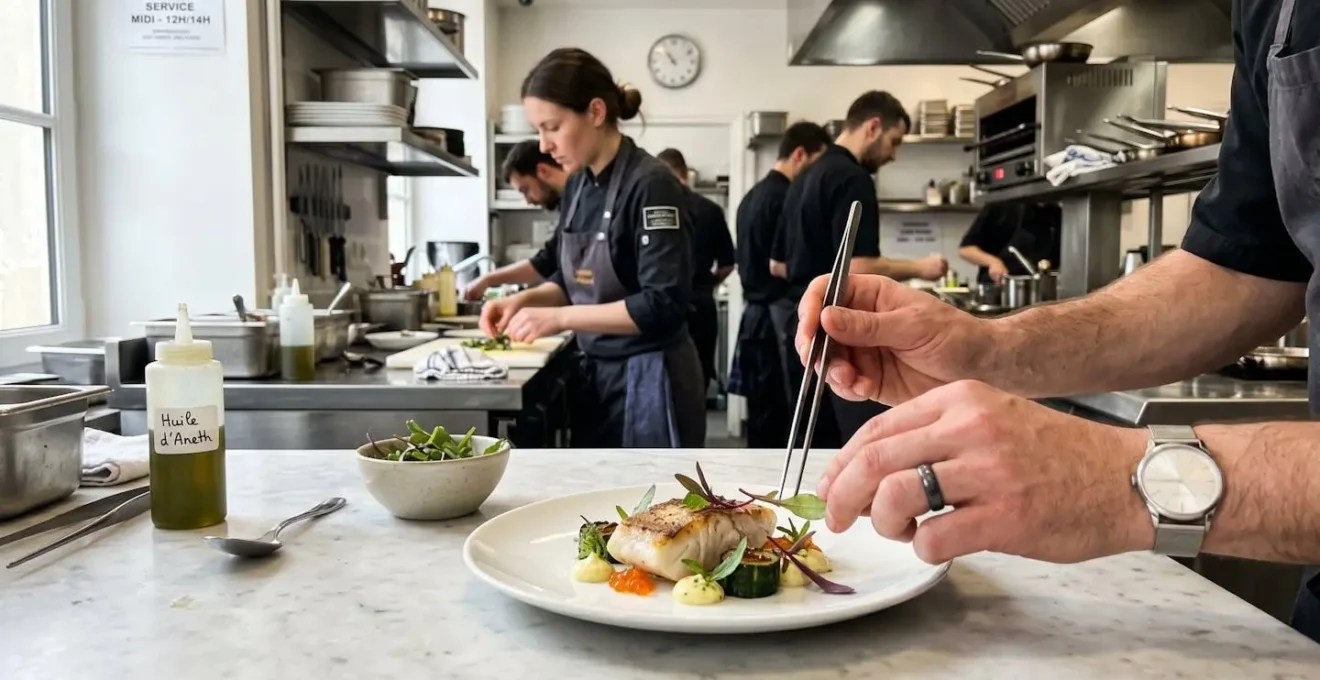
Consider a scenario where two travellers attempt self-catering in an unfamiliar French market. The oyster vendor speaks no English; seasonal vegetables remain unidentifiable; recipes require ingredients stocked only in speciality shops three villages away. What promised authentic local cuisine devolves into frustration, wasted ingredients and eventual resort to mediocre tourist restaurants. A private chef eliminates every friction point whilst delivering something restaurant dining cannot: complete menu personalisation within the comfort of your own space.
Professional private chef services operate quite differently from the catering model many travellers imagine. Rather than arriving with pre-prepared dishes, chefs typically source ingredients from local markets the morning of meal preparation, ensuring peak freshness and seasonal appropriateness. Menu development begins weeks before arrival through detailed consultation covering dietary requirements, flavour preferences and cultural curiosities. The result feels less like hiring a cook and more like gaining temporary access to a culinary insider who translates the region’s gastronomic landscape into bespoke dining experiences.
15%
Year-over-year revenue increase in luxury experiential stays sector
The growth trajectory speaks to shifting priorities. The 2025 Luxe Report from The Leading Hotels of the World documents a sustained demand surge, identifying “bespoke service, authenticity and exceptional quality” as core drivers separating top-tier properties from standard accommodation. Private chef arrangements embody all three: authentic local ingredients, bespoke menu curation and quality that sidesteps the compromises inherent in restaurant service—fixed seating times, limited menu flexibility, ambient noise and lack of privacy for family conversations.
The invisible touch: housekeeping beyond the basics
Standard villa rentals typically offer two cleaning interventions: mid-stay tidying and checkout deep-clean. Hotel-serviced properties operate on an entirely different rhythm. Daily housekeeping maintains the property in perpetual ready-state—beds made, towels refreshed, surfaces cleaned, bins emptied. The distinction might seem trivial until you experience the cumulative impact over a week: no progressive disorder, no domestic chores intruding on holiday time, no debates about whose turn it is to load the dishwasher.
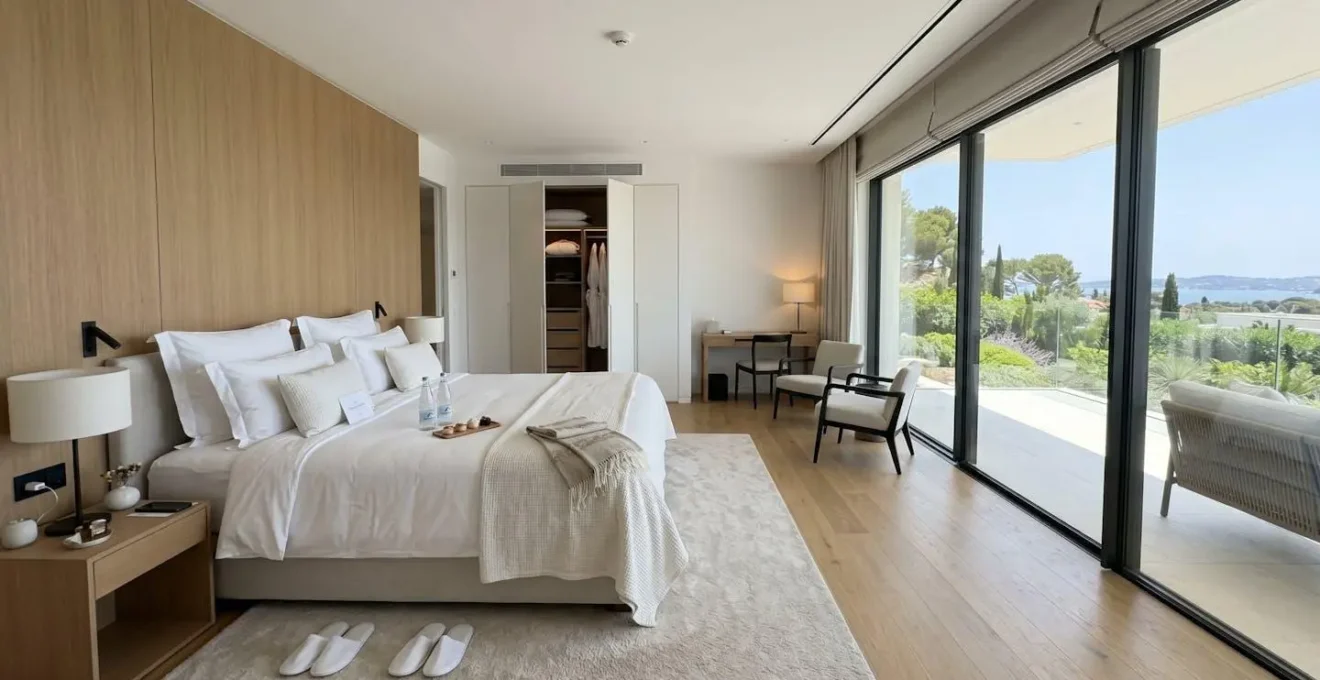
Turndown service represents the clearest demarcation between hotel-standard care and basic cleaning. The EHL hospitality school identifies turndown as a distinct, formalised process separate from room cleaning—an evening ritual that prepares the property for optimal sleeping conditions through bed preparation, towel refresh, ambient lighting adjustment and climate control optimisation. When evaluating private villa rental on the Riviera or other luxury markets, this detail separates operators maintaining genuine hotel protocols from those offering glorified maid service.
The practical benefit extends beyond aesthetics. Professional housekeeping teams operate on predictable schedules communicated in advance, allowing guests to plan their days without unexpected interruptions. Staff arrive discreetly during agreed windows—typically mid-morning when most guests are out—and complete their work invisibly. Privacy remains protected through clear protocols about which spaces require service and which remain untouched.
Your villa guardian: round-the-clock guest care
The true test of service quality arrives at inconvenient moments. A malfunctioning air-conditioning unit at midnight. A missing corkscrew ten minutes before dinner guests arrive. A child’s favourite toy left at a restaurant across the island. Hotel guests resolve such issues with a single phone call to reception. Standard villa renters face uncertainty: Will the property manager answer? How quickly can they respond? Do they even have the authority to solve the problem?

When urgent support makes the difference
A British family staying on Île de Ré discovered their dishwasher leaking at 21:00 on a Saturday evening—hardly an emergency, but enough to disrupt their plans for a relaxed dinner at the villa. The property management team answered immediately, dispatched a local technician within 90 minutes and provided a temporary solution whilst arranging a permanent repair for the following morning. The family’s holiday continued without further disruption. The scenario illustrates why professional guest care infrastructure matters: not because disasters occur frequently, but because when minor issues arise, rapid resolution prevents them from escalating into holiday-ruining frustrations.
Quality-focused operators build comprehensive support systems long before guests arrive. Pre-arrival property inspections verify that every appliance functions, every promised amenity exists and the property matches its marketing description. This proactive quality control eliminates the unpleasant surprises that plague standard rentals—broken coffee machines, missing pool towels, Wi-Fi passwords that don’t work.
The Hospitality Net analysis of service excellence identifies “speed of response and frictionless delivery” as defining pillars of luxury care, noting that “no one wants to wait or say things twice” even during leisure stays. Premium villa management translates this principle into tangible protocols: dedicated guest relations contacts, clear escalation procedures for urgent issues and authority structures that empower on-ground staff to solve problems immediately rather than requesting permission from distant property owners. The result approaches—and occasionally exceeds—the responsiveness travellers expect from five-star hotel concierge desks.
Choosing your service level: when hotel-serviced villas make sense
Honest assessment requires acknowledging that comprehensive service packages don’t suit every traveller. Those who derive satisfaction from complete autonomy—researching restaurants independently, cooking all meals themselves, managing their own schedules without external coordination—may find professional support intrusive rather than liberating. Similarly, couples seeking absolute seclusion might prefer properties with minimal staff presence over daily housekeeping visits, regardless of how discreetly managed.
- Substantially more space per person than equivalent hotel suites
- Complete privacy and exclusive use of property and facilities
- Bespoke service customisation impossible in hotel environments
- Elimination of domestic tasks and logistical planning burdens
- Premium pricing above property-only rental rates
- Staff presence schedules require coordination and communication
- Service scope variations between operators demand careful vetting
The decision framework clarifies when serviced villas deliver maximum value. Families with young children benefit enormously—professional childcare coordination, dietary flexibility for picky eaters and housekeeping that prevents holiday homes from descending into chaos. Groups celebrating milestones gain access to experiences impossible in hotels: private chef dinners for twelve, customised wine tastings and exclusive use of pools and outdoor spaces. Travellers prioritising authentic local immersion whilst maintaining comfort appreciate concierge services that unlock insider access without requiring weeks of research.
Understanding how these villa services compare to traditional amenities of luxury hotels requires examining your actual usage patterns rather than aspirational preferences. If you rarely dine in hotel restaurants despite their Michelin stars, private chef flexibility matters more than proximity to acclaimed dining. If you value morning coffee on a private terrace over hotel breakfast buffets, space trumps shared facilities. The optimal choice emerges from honest assessment of which elements truly enhance your experience versus those that merely sound impressive in marketing materials.
Is it worth paying extra for villa services?
The value equation depends on opportunity cost. If researching restaurants, booking activities and managing property logistics consumes five to eight hours of your holiday week, professional services reclaim that time for actual relaxation. For groups, the per-person premium often proves negligible when distributed across multiple travellers. The clearest indicator: travellers who experience comprehensive service packages rarely return to property-only rentals.
Will staff be in my villa all day?
Professional operators establish clear schedules communicated before arrival. Housekeeping typically occurs during predictable morning windows when most guests are out. Private chefs arrive for meal preparation at agreed times and depart after service. Concierge support operates remotely unless you specifically request in-person assistance. The objective is invisible support, not intrusive presence.
What if I need something urgently?
Quality villa management provides dedicated contact numbers with rapid response protocols. Urgent requests—broken appliances, medical assistance, lost keys—receive immediate attention. Non-urgent needs are typically addressed within a few hours. The key differentiator is authority: premium operators empower local staff to solve problems immediately rather than requiring approval from distant property owners.
Can the private chef cook anything I want?
Professional chefs accommodate dietary requirements, cultural preferences and specific requests within the constraints of local ingredient availability. Pre-arrival consultations establish menu frameworks, but flexibility remains built into the process. Most chefs welcome the creative challenge of adapting their techniques to guest preferences whilst showcasing regional specialities and seasonal produce.
Do I have to tip the villa staff?
Tipping practices vary by region and operator. Many all-inclusive packages build gratuities into pricing, eliminating awkward end-of-stay calculations. When gratuities aren’t included, standard guidance suggests 10-15% of service costs for exceptional care, though this remains discretionary. Clarify tipping policies during booking to avoid uncertainty.
- Request detailed service schedules including housekeeping windows and chef availability patterns
- Clarify which services are included versus available at additional cost to avoid pricing surprises
- Verify pre-arrival property inspection protocols and quality control mechanisms
- Confirm emergency contact procedures and guaranteed response timeframes for urgent issues
The luxury villa market will continue evolving as operators refine the balance between privacy and service, autonomy and support. Those who succeed will be the ones who recognise that true luxury isn’t about overwhelming guests with amenities—it’s about anticipating needs so seamlessly that service becomes invisible, leaving only the experience itself.